
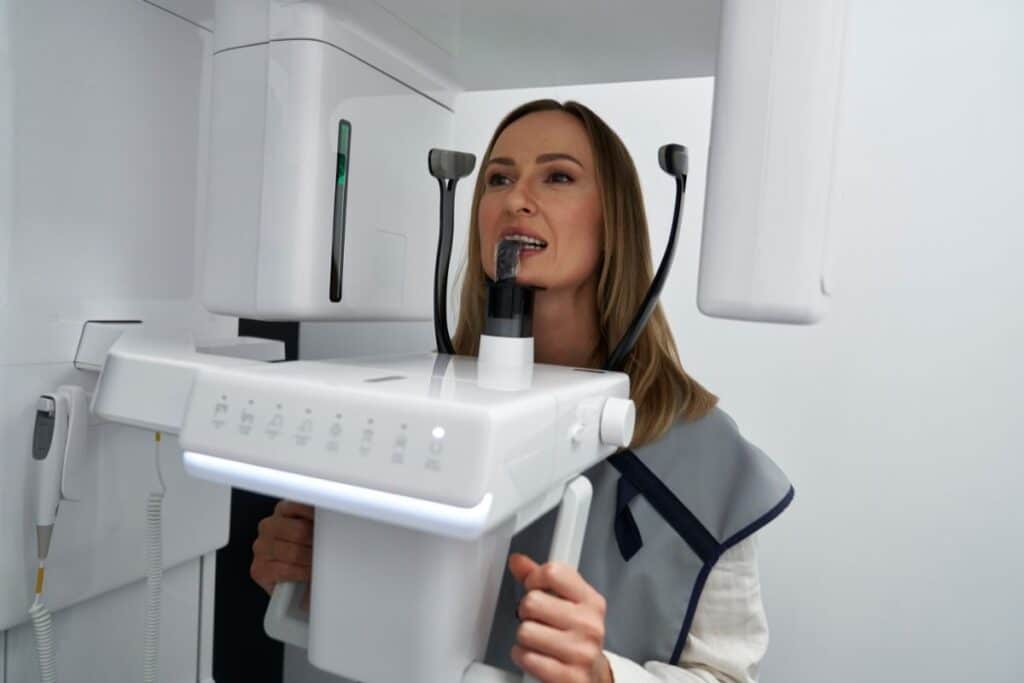
Early detection is the most significant advantage you have against cancers of the mouth and throat. That is why, during a routine visit, a dentist in Winchester, VA, checks for cavities and evaluates the soft tissues of your mouth for subtle changes that could signal concern. A modern oral cancer screening during routine dental checkups is quick, painless, and can spot problems before you notice anything yourself.
How Does A Dental Professional Examine Your Mouth?
During this short exam, professionals methodically inspect the lips, cheeks, tongue (including the sides and underside), gums, roof of the mouth, and the area under the tongue. They also look toward the back of the throat. After the visual check, they will gently feel along your jawline, under your chin, and on the sides of your neck. This helps detect any hidden swellings or enlarged lymph nodes that might not yet be visible.
Some practices dim the overhead light and use a focused beam to highlight tissue changes, or apply a rinse or dye that makes abnormal cells stand out clearly. These tools do not replace a careful clinical exam, but they help to decide whether an area needs closer monitoring.
What Dental Hygienists Examine During A Screening?
1.1 Visual Examination Of Soft Tissues
The professional begins with a thorough visual assessment of the lips, cheeks, tongue, gums, roof of the mouth, and throat. They look for texture changes, abnormal coloration, and irregular tissue patterns that may require attention.
1.2 Manual Palpation Of Oral And Neck Structures
Dental practitioners gently press along the jawline, under the chin, and around the neck to detect firm swellings, masses, or enlarged lymph nodes that may not yet be visible. This combination of visual and tactile evaluation is one of the most reliable early-detection methods.
1.3 Use Of Diagnostic Lights Or Rinses
Some practices enhance visibility with special lights or contrast rinses to highlight unusual tissue changes. These tools refine, rather than replace, clinical expertise.
2. Color And Texture Changes That Raise Concern
2.1 Patches And Persistent Discolorations
A dentist in Winchester, VA, watches closely for:
- Flat, pale areas (often referred to as leukoplakia)
- Velvety red patches (erythroplakia)
- Mixed red-and-white lesions
These findings may represent irritation, but can also indicate precancerous tissue if unchanged for two weeks or longer.
2.2 Ulcers, Rough Spots, And Abnormal Surfaces
Any ulcer with raised borders, persistent bleeding, or a crater-like center is documented carefully. Surface thickening, crusting, or long-lasting roughness can also signal underlying issues that require monitoring or referral.
3. Structural Changes And Physical Clues
3.1 Lumps, Nodules, Or Tissue Thickening
Firm areas under the tongue, inside the cheeks, or at the base of the tongue may indicate deeper tissue involvement. These signs are not always visible and depend heavily on the dentist’s trained touch.
3.2 Jaw Or Bite Changes
Symptoms such as unexpected tooth loosening, difficulty moving the jaw, or dentures suddenly fitting differently may indicate deeper structural changes that warrant evaluation.
Symptoms And Sensations You Should Mention
Visual changes are only part of the picture. The dental professional also relies on what you report. A persistent mouth sore that does not heal within two weeks, especially if it bleeds easily or keeps returning to the same spot, deserves attention.
Other red flags include numbness or tingling in the lips, tongue, or face; a chronic sore throat or hoarseness; a feeling that something is “caught” when you swallow; or new difficulty chewing or moving your jaw or tongue. Even a one-sided earache without obvious ear disease can occasionally be linked to a problem further down the throat.
Because risk is higher in some groups, professionals will also consider lifestyle and medical history. These include tobacco use, heavy alcohol intake, and HPV-related oral cancer risk factors. This helps determine how closely to monitor specific areas or how often to screen.
Turning A Routine Visit Into A Lifesaving Prevention
Your routine dental visit is more than a cleaning, but a key part of protecting your long-term health. In just a few moments, your dental team can identify color shifts, structural changes, and early tissue variations that would otherwise go unnoticed. Rather than causing alarm, they document crucial findings, monitor changes over time, and recommend further evaluation only when it supports your safety.
At Shenandoah Family Dentistry, every visit is planned to support your complete well-being. Our team takes a thorough, thoughtful approach to screenings, evaluating tissue health, noting changes, and using advanced methods when needed. We prioritize clear communication and comfort, ensuring you understand every step of your care. By staying consistent with your checkups, you gain a strong system of early detection that protects your health and peace of mind.
Schedule an appointment and let us help you maintain a confident, healthy future.
Frequently Asked Questions (FAQs)
1. What are the early warning signs of oral cancer?
Early signs may include persistent mouth sores, color changes, or unusual lumps that don’t improve over time. These symptoms often appear subtle, making routine screenings essential for detection.
2. How often should I receive an oral cancer screening?
Most adults benefit from a screening during every routine dental exam. Our dental practitioner may recommend more frequent checks based on medical history or risk factors.
3. Does an oral cancer screening hurt?
No, screenings are completely painless and involve only visual inspection and gentle palpation of tissues. The goal is to identify changes early without causing discomfort.
4. Can oral cancer develop without noticeable symptoms?
Yes, early-stage oral cancer often develops silently, with changes too subtle for patients to recognize. That’s why professional evaluations are vital for catching concerns before symptoms appear.
5. What should I tell my dentist before an oral cancer screening?
Share any history of persistent sores, swallowing difficulties, numbness, or changes in your mouth or throat. These details help our team focus on areas needing closer evaluation.