How Do Cavities Develop?
Poor oral hygiene practices facilitate the buildup of plaque and bacteria, both of which produce acids. These acids, when left on the surfaces of the teeth for too long, begin to erode the enamel, causing tooth decay. Eventually, cavities, or small pits, form on the teeth. Bacteria take up residence in these cavities and continue to multiply. As they do, they continue to destroy the structure of your teeth. The cavities continue to grow in size, and can even develop into the inner layers of the teeth. If this happens, you could be left with a painful infection, as well as other complications.
Amalgam Fillings
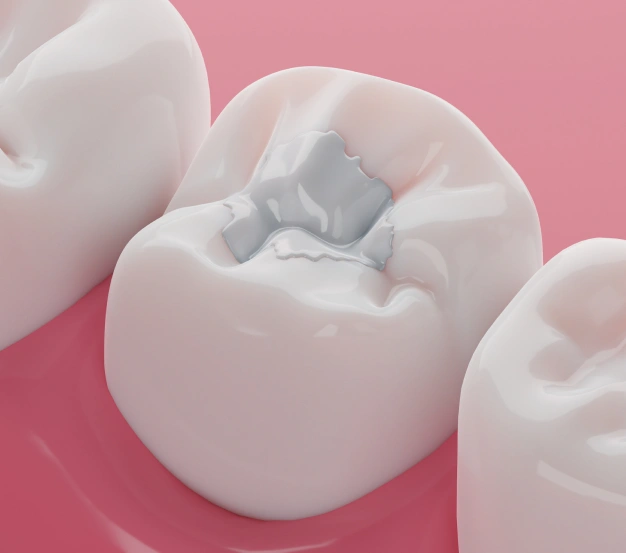
Traditionally, amalgam fillings have been used to treat cavities. These fillings have been in use for over 150 years, and are well-known for their superior strength. They can withstand heavy biting forces, making them ideal for cavities at the back of the mouth.
Amalgam fillings are made up of a mixture of metals, which are suspended in mercury. They are silver in color and stand out quite obviously from the rest of your natural tooth. This can cause aesthetic concerns, particularly for cavities toward the front of the mouth. The metal and mercury content in these fillings also raise some concerns with many patients.
The process for filling cavities with amalgam is a fairly straightforward procedure that can be completed in a single visit. A local anesthetic is administered, which helps to prevent you from feeling any discomfort. The decay is removed from the tooth and the cavity is shaped. The amalgam is placed into the cavity and smoothed. Finally, it is hardened and immediately begins protecting your tooth.
Tooth-Colored Fillings
Tooth-colored fillings were developed as an alternative to traditional amalgam fillings. These fillings are composite resin, which is a mixture of fine glass, plastic and other materials. They are white in color, matching the color of your natural enamel. While they are not as strong as amalgam, they are perfect for cavities in teeth toward the front of the mouth. Composite resin fillings are free from metals, as well as mercury. Composite resin fillings are placed in a similar fashion to traditional amalgam fillings. The tooth is cleaned and the decay is drilled away. Not every situation requires a local anesthetic. This is because we do not need to remove as much of your natural tooth structure. Composite resin actually bonds to the tooth, rather than just sitting inside of it. After the material is placed inside, the filling is cured using a specialized light, and it is finally polished to a beautiful, natural finish. If you suspect you have a cavity, do not wait for your next appointment. Getting it filled as soon as possible is essential for the prevention of serious damage. Call Shenandoah Family Dentistry to schedule your consultation today at 540-773-0234.
Frequently Asked Questions About Tooth-Colored Fillings
What are tooth-colored fillings made of?
Tooth-colored fillings are typically made from composite resin, a material that can be matched to the natural shade of the tooth. The resin bonds to the tooth and is hardened with a specialized curing light.
Why choose tooth-colored fillings instead of amalgam fillings?
Tooth-colored fillings provide a more natural-looking alternative to traditional silver-colored amalgam fillings. Composite resin is also a metal-free material and can bond directly to the tooth, which may allow more of the healthy tooth structure to be preserved during treatment.
Can tooth-colored fillings be used on front and back teeth?
Composite fillings can be used to repair cavities in different areas of the mouth, although the best material depends on the size and location of the cavity and the forces placed on the tooth. Shenandoah Family Dentistry in Winchester can evaluate the affected tooth and recommend an appropriate restoration.
Do tooth-colored fillings require anesthesia?
Not every composite filling requires local anesthesia. The need for anesthesia depends on factors such as the location and depth of the cavity and the individual patient’s comfort. The dental team at Shenandoah Family Dentistry in Winchester, VA can discuss what to expect before treatment begins.
Will a composite filling look like my natural tooth?
Yes. Composite resin can be matched to the shade of the surrounding tooth, allowing the filling to blend into the smile. This makes tooth-colored fillings particularly appealing when treating visible teeth.
Do tooth-colored fillings preserve more of the natural tooth?
Composite resin bonds directly to the tooth, which can allow the restoration to be placed while preserving more healthy tooth structure compared with some traditional filling techniques. The amount of tooth structure that can be preserved depends on the extent of the decay.
Can tooth-colored fillings repair a large cavity?
Composite fillings are suitable for many cavities, but a larger or extensively damaged tooth may require a different restoration, such as a dental crown. Shenandoah Family Dentistry in Winchester can assess the remaining tooth structure and determine which option provides appropriate support.
Where can I get tooth-colored fillings in Winchester, VA?
Shenandoah Family Dentistry in Winchester provides tooth-colored composite fillings for patients with cavities in Winchester, VA, and surrounding areas. The practice is located at 1705 Amherst St#102 Winchester, VA 22601. Call 540-773-0234 to schedule an appointment and discuss treatment options.